At WASHK, we believe the most revealing days are the ordinary ones — the Tuesdays when nothing particularly happens, but a great deal quietly does.
Abby is in Year 2. She is seven, she moves through the world with cheerful purpose, and she distributed stickers to both friends and teachers with the kind of generosity that suggests she had been planning it. She also learnt about surrealism, won at Snakes and Ladders, and spent some time thinking about Nelson Mandela.
Here is how her day looked.
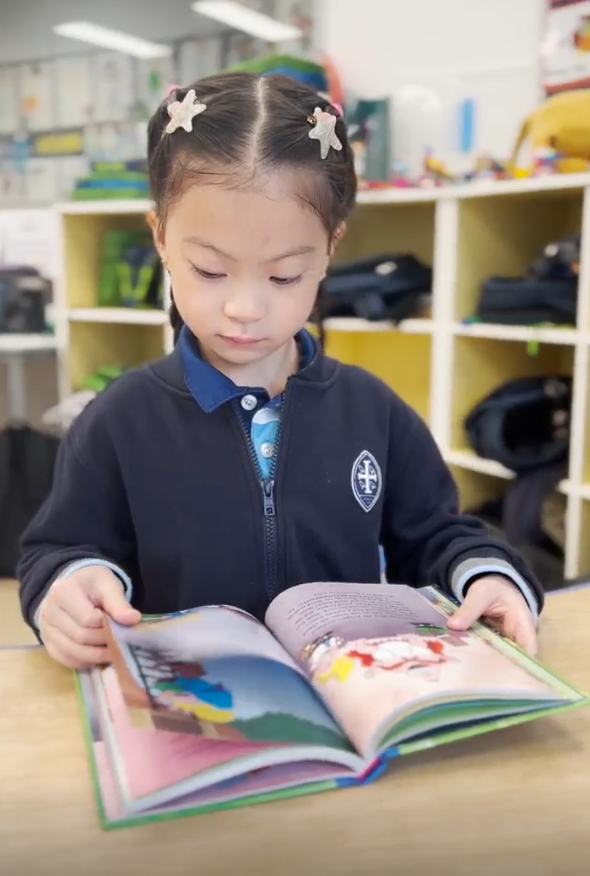
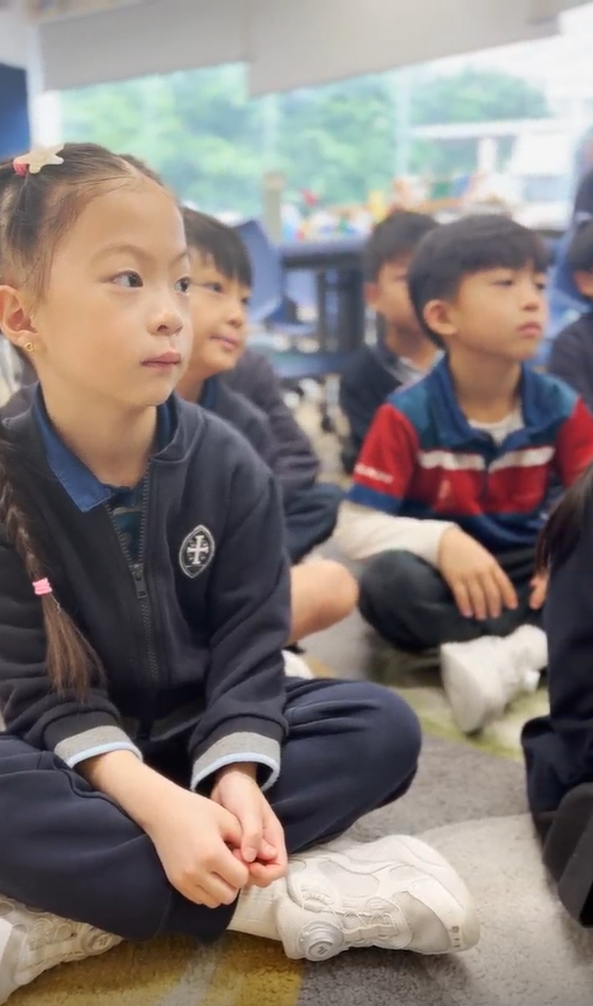
8:00am — Form Time: Getting Ready for the Day
The morning begins in the classroom. Abby finishes up some work, settles in with a book, and then joins her class on the carpet for their morning meeting — a small ritual that signals the day is about to begin.
That moment matters more than it might seem. When children know the rhythm of the day, they feel settled enough to take risks within it. Structure, at its best, is what makes freedom possible.
8:25am — Maths: The Snack Shop is Open
The lesson is about money: identifying coins, understanding value, working out how amounts combine. And then, because understanding something is one thing and using it is another, the class opens a snack shop.
Abby and her classmates match coins to prices and make their own signs for the stall. It is the kind of activity that looks like play and is, in fact, deeply purposeful. Money is abstract until you are deciding whether a biscuit costs 50 cents or two dollars. By the time the lesson ends, the concept has moved off the page and into something she can actually use.
This is how learning is designed to work at WASHK: real contexts, genuine application, and the satisfaction of understanding why.
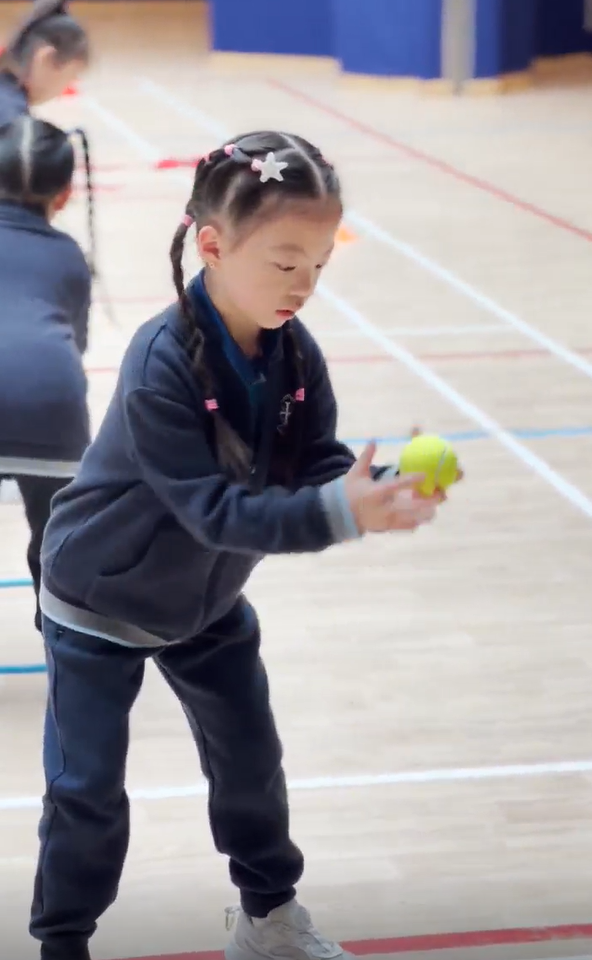
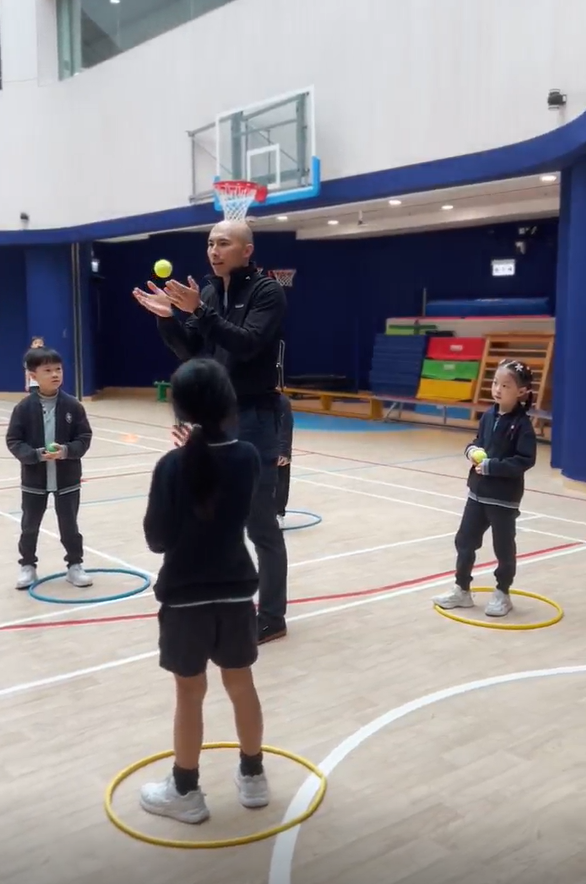
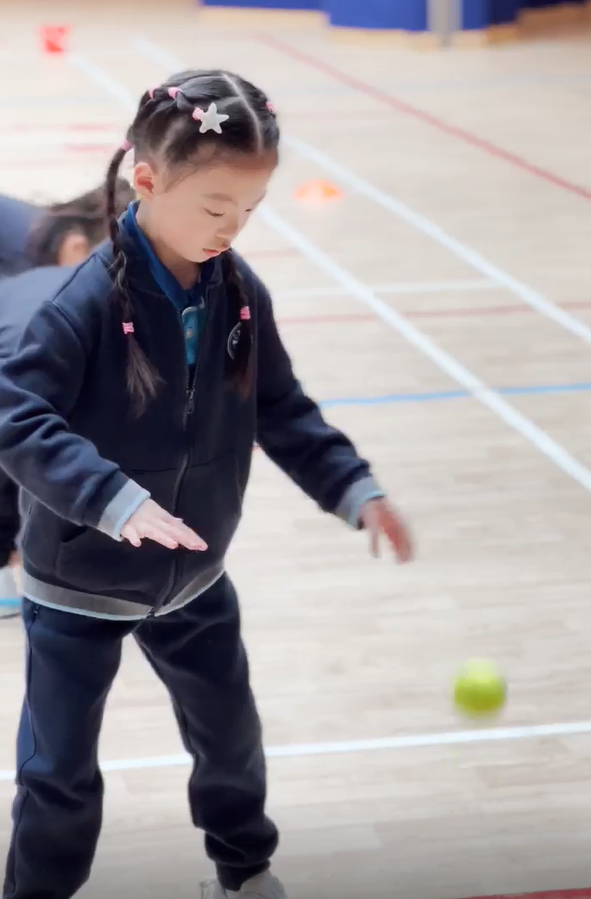
9:00am — PE: Balls, Relay Races, and A Great Deal of Movement
PE begins with ball-bouncing: control, coordination, the patience required to keep something going. Then Abby and her team run relay races. There is encouragement, mild chaos, and the particular satisfaction of physical effort that goes somewhere.
Physical education at this age is about moving confidently, trying things that require practice, and working alongside others towards a shared goal. At WASHK, it sits alongside academic learning as something genuinely important, not squeezed in around the edges, but built into the fabric of the day.
10:10am — Break: Snacks and Stickers for Everyone
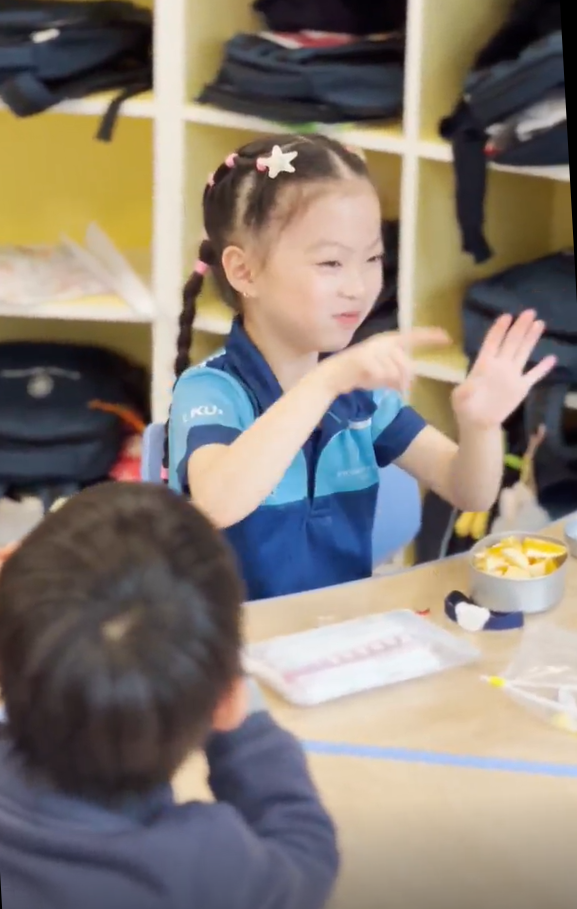
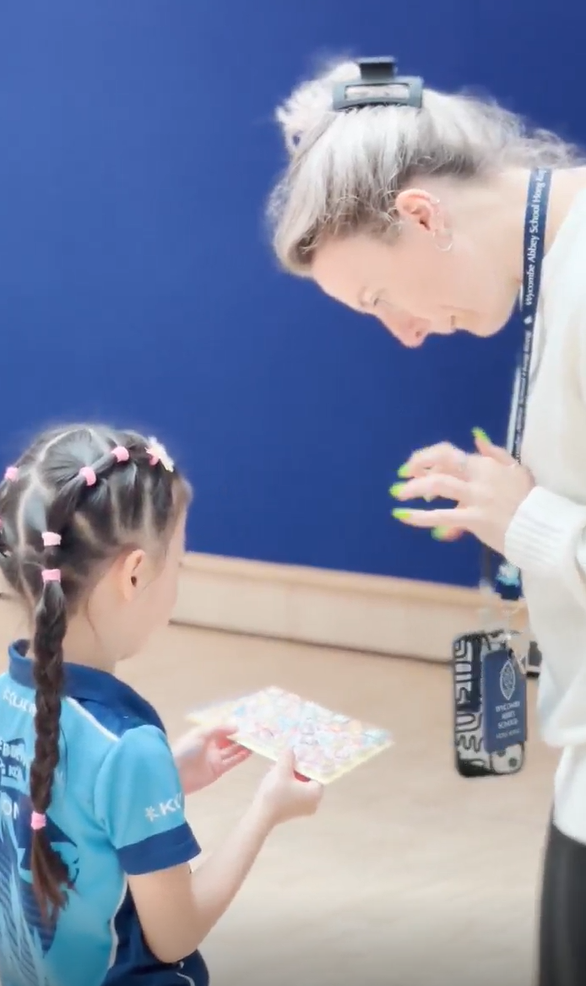
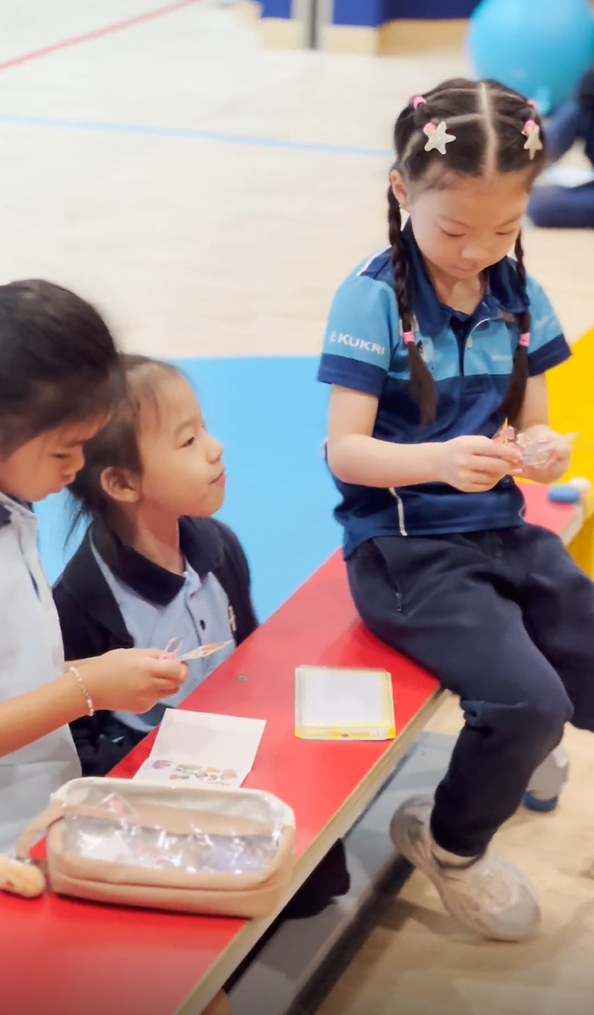
At break, Abby eats her snack then heads to the atrium to play. In what may be the most socially confident move of the day, she gives stickers to her friends and her teachers.
It is a small detail, but it says something real: Abby is comfortable here. The relationships between pupils and staff at WASHK are warm and genuine, and that ease does not happen by accident. It is built, carefully, over time.
10:30am — Library: Being Clever Saves the Day
In the library, a guest teacher reads Abby’s class a book. From it, Abby takes away an important lesson: that in all kinds of difficult situations, you need to be clever to find a way through.
That is an impressive observation for a seven-year-old, and it is exactly the kind of thinking that happens when reading is treated as something worth discussing rather than simply completing. Literacy runs through the whole school day – in the library, in the conversations that follow a story, in the questions children are encouraged to ask long after the book is closed.
11:05am — Art: Surrealism, Joan Miró, and Invented Characters
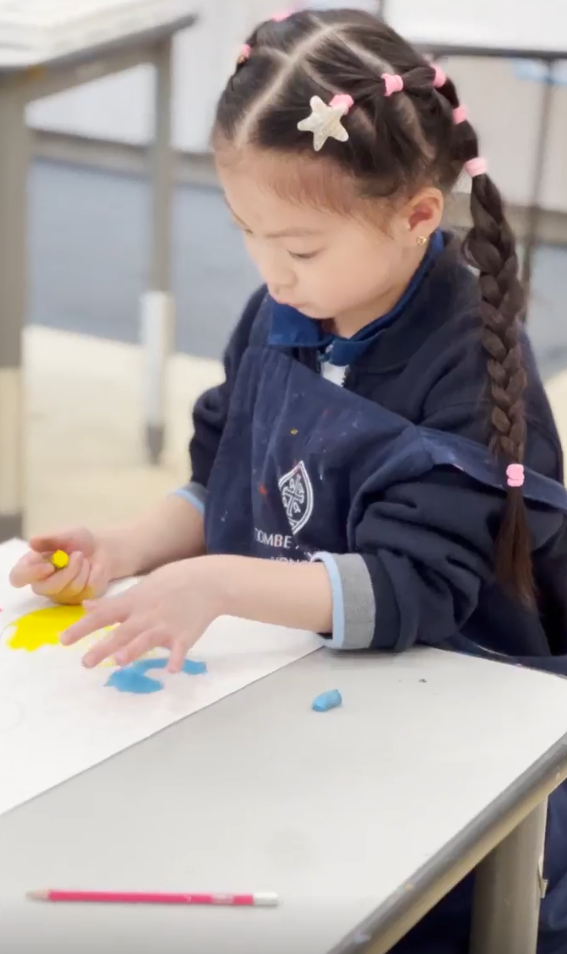
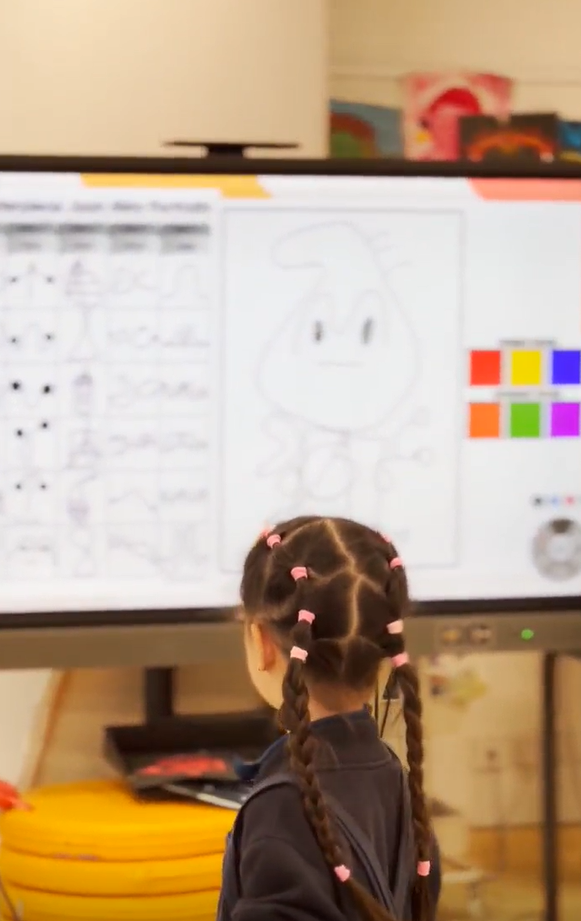
Art is where the morning takes a turn towards the delightfully strange. The class is introduced to surrealism. Art that is supposed to be strange, with rules that cheerfully bend. They look at the work of Joan Miró: bright shapes, improbable creatures, a world that hovers between recognisable and invented.
Then they draw. Abby creates characters of her own, inspired by what she has seen. The results are excellent.
The school’s arts provision takes creativity seriously from the very earliest years, not as a break from learning, but as a mode of it. When a seven-year-old learns that Miró’s strangeness had a name and a reason, she also learns that her own imagination is a legitimate place to start.
12:15pm — Lunch: Pizza, Broccoli, and Classroom Play
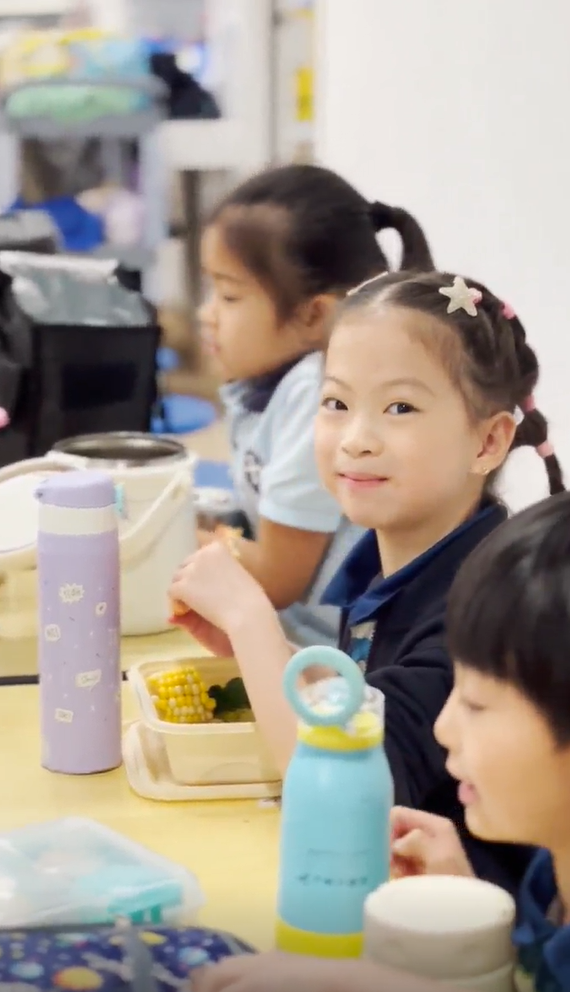
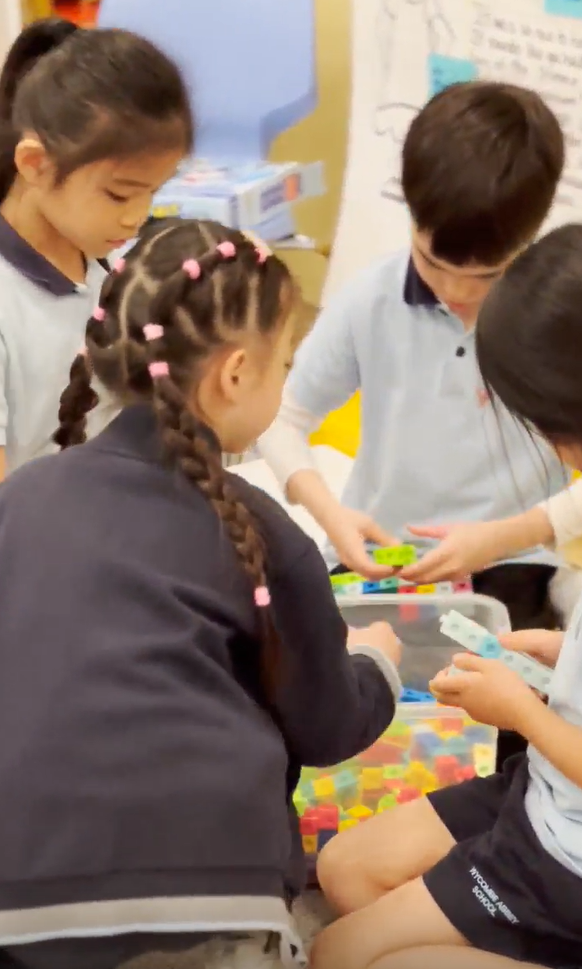
There is pizza, broccoli, and corn. Abby approves of at least one of these unreservedly. After eating, she and her friends play in the classroom. The easy, unstructured kind that consolidates friendships and, for what it is worth, gives the morning’s learning somewhere to settle.
1:15pm — Chinese: Animal Stories, Vocabulary, Abby Wins
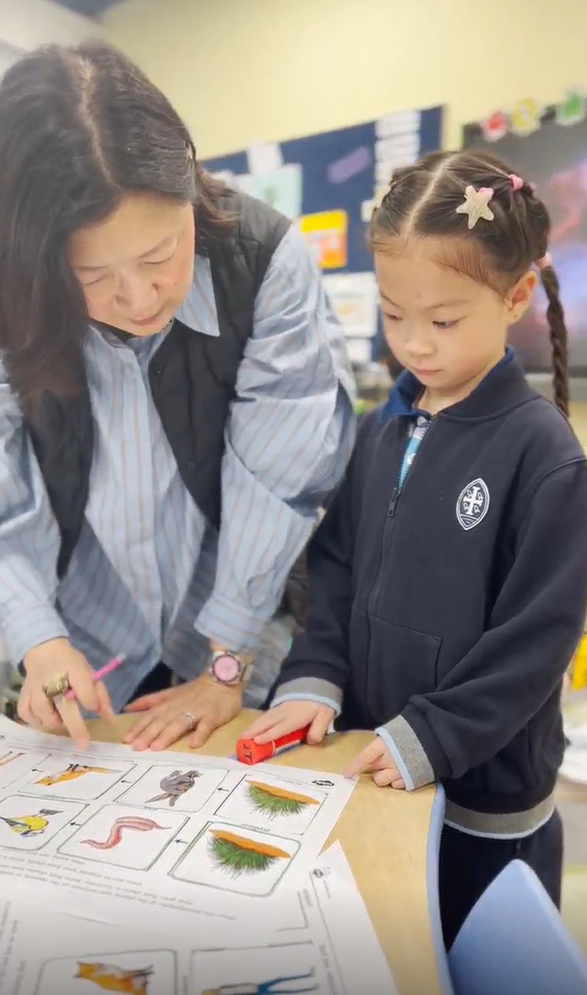
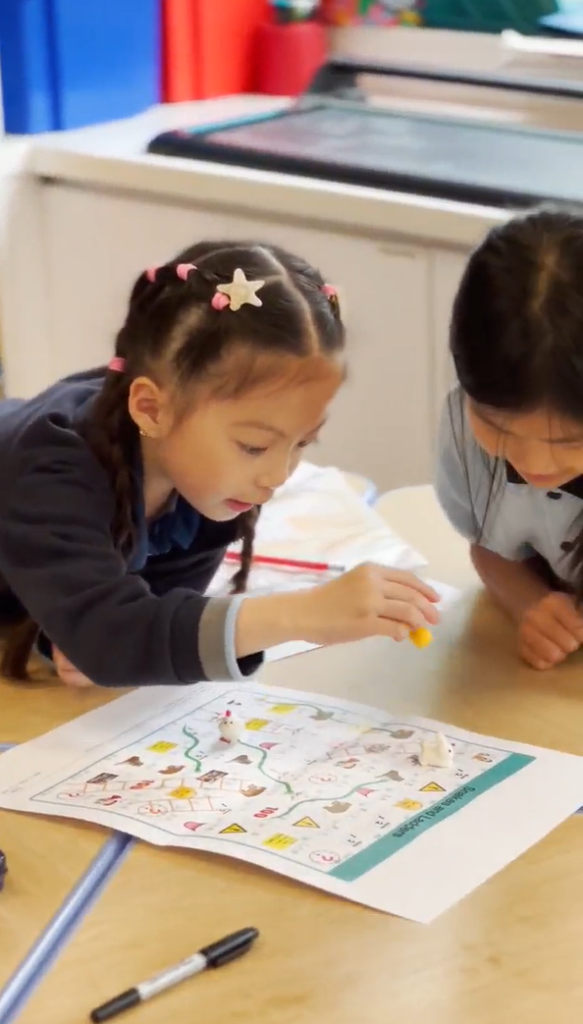
Chinese class begins with vocabulary from a story about animals. Abby revisits words she has been learning, returning to language she already knows and deepening her grasp of it. This kind of revisiting, coming back to material in a new context, is how language actually sticks.
At the end of the lesson, the class plays Snakes and Ladders. Abby wins.
At WASHK, Mandarin is taught with the seriousness it deserves, as both a core language and a cultural key. The fact that learning it can end with a board game and a moment of genuine triumph is entirely by design.
1:50pm — English: Nelson Mandela and a Lot to Think About
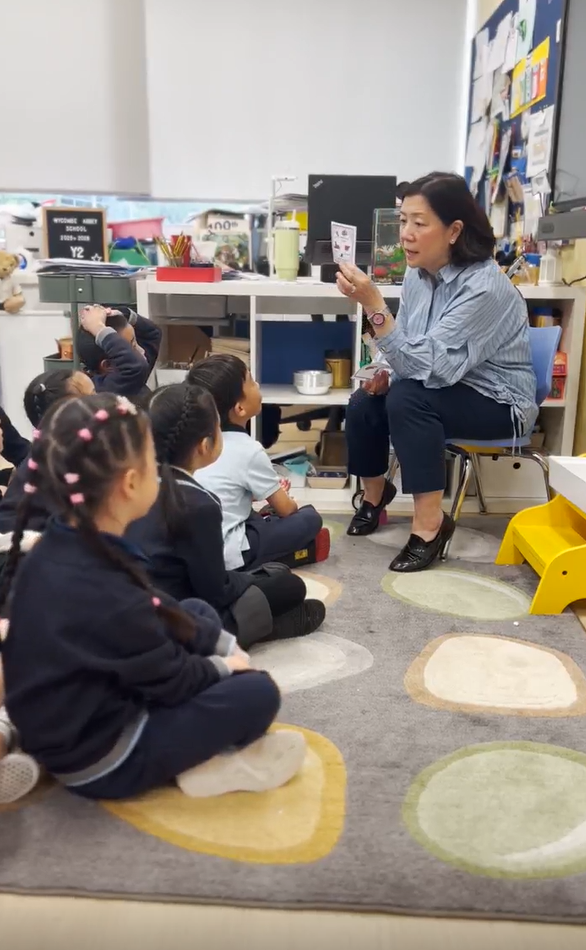
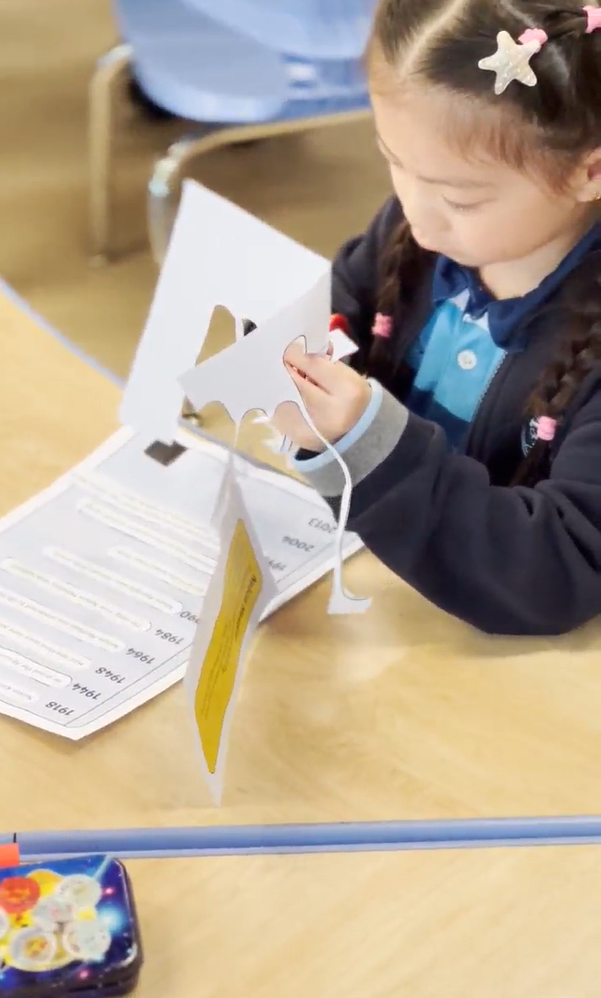
The final lesson is English, and the subject is Nelson Mandela. Abby and her classmates learn who he was, what he stood for, and why he still matters. They work through some worksheets to consolidate their understanding.
It is worth pausing on that. A Year 2 class in Hong Kong ends their Tuesday thinking about courage, justice, and one of the most significant figures of the twentieth century. Global citizenship is not a module saved for older students. It begins early at WASHK, with the simple idea that the world is full of people who made choices — and that it is worth knowing who they were.
What a Day Like This Shows
Abby’s Tuesday moved through money and relay races and surrealism and Snakes and Ladders and Nelson Mandela, and she gave out stickers along the way. This is a typical day at WASHK.
But school, at its best, is exactly this: a place where children encounter ideas bigger than themselves, practise skills in contexts that make them meaningful, and build genuine relationships with the people around them. This is what the Prep School is designed to look like at WASHK, not just on open days, but on ordinary Tuesdays.
Learn More About Our Prep School
Abby’s day offers just one glimpse into life at Wycombe Abbey School Hong Kong.
Our Prep School brings together a broad, balanced curriculum with the warmth of a close-knit community where children learn to read, to reason, to create, and to look after one another. From structured maths and language lessons to art, PE, library time, and Mandarin, every part of the day is shaped with purpose. Learning extends well beyond the classroom too, through extra-curricular activities, school events, and the kind of ordinary moments that stay with children long after the day is done.
If Abby’s Tuesday has sparked your curiosity, learn more about our Prep School. We also warmly invite you to experience our school in person. The noise of the atrium at break, a classroom mid-debate, a sticker offered to a teacher on a quiet Tuesday morning.
